
A real-world breakdown of charging an Elroq 80 (77 kWh usable) across a long trip through Devon and Cornwall — every kWh, every penny, and how it stacks up against petrol.
The Trip at a Glance
- Car: Skoda Elroq 80 (77 kWh usable)
- Start: 100% battery (charged at home)
- End: 28% battery remaining
- Distance covered: 806 miles
- Total energy used driving: 214 kWh
- Efficiency: 3.77 mi/kWh (~265 Wh/mile)
Every Charge, Broken Down
Over the trip, I charged four times on the road, plus the initial full charge at home. Here's each session in detail.
Home (pre-trip top-up)
- Location: Home, off-peak
- Energy: 77.00 kWh (full battery)
- Rate: 7p/kWh
- Cost: £5.39
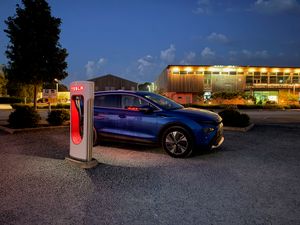
Session 1 — Tesla Supercharger, Darts Farm
- Location: Darts Farm, Exeter
- Date: 22 May 2026
- Duration: 51 min 2 sec
- Energy: 49.35 kWh
- Rate: 29.0p/kWh
- Cost: £14.31
Session 2 — SeaSpace, Newquay (Monta)
- Location: SeaSpace, Watergate Road, Newquay, TR7 3LX
- Date: 24 May 2026
- Time: 5:27 pm – 10:46 pm (5h 18m)
- Energy: 48.77 kWh
- Rate: 68.4p/kWh list, 63p after discount
- Cost: £33.36 − £2.66 discount = £30.70
Session 3 — SeaSpace, Newquay (Monta)
- Location: SeaSpace, Watergate Road, Newquay, TR7 3LX
- Date: 26 May 2026
- Time: 4:51 pm – 8:55 pm (4h 4m)
- Energy: 13.31 kWh
- Rate: 68.4p/kWh list, 63p after discount
- Cost: £9.11 − £0.73 discount = £8.38
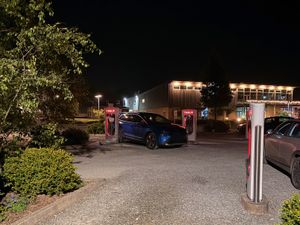
Session 4 — Tesla Supercharger, Darts Farm
- Location: Darts Farm, Exeter (EX3 0QH)
- Date: 27 May 2026
- Time: 10:08 PM
- Duration: 33 mins
- Energy: 47.13 kWh
- Rate: 29.0p/kWh
- Cost: £13.66
Summary table
| Date | Site | Energy | Cost | Rate |
|---|---|---|---|---|
| 22 May | Tesla, Darts Farm | 49.35 kWh | £14.31 | 29.0p |
| 24 May | SeaSpace, Newquay | 48.77 kWh | £30.70 | 63.0p |
| 26 May | SeaSpace, Newquay | 13.31 kWh | £8.38 | 63.0p |
| 27 May | Tesla, Darts Farm | 47.13 kWh | £13.66 | 29.0p |
| Public total | 158.56 kWh | £67.05 | 42.3p avg | |
| Home | Off-peak | 77.00 kWh | £5.39 | 7.0p |
| Grand total | 235.56 kWh | £72.44 | 30.8p avg |
The Cost Breakdown
A few numbers worth pulling out of the table above.
- Total spend (all-in): £72.44 for 235.56 kWh
- Public charging only: £67.05 for 158.56 kWh
- Blended average rate: 30.8p/kWh
- All-in cost per mile: 8.99p
- Cost per mile (energy actually driven): 8.16p
- Total time spent charging on the road: ~10h 46m
The 4x price gap
The single biggest lesson: Where and When you charge beats everything else. Charging at Tesla after 10pm drops the price to 0.29p.
| Time | Price |
|---|---|
| 8am – 6pm | 59p/kWh |
| 6pm – 10pm | 38p/kWh |
| 10pm – 8am | 29p/kWh |
- Tesla Superchargers: 29p/kWh
- SeaSpace AC chargers: 63p/kWh
- Home off-peak: 7p/kWh
The hotel in Newquay had car park chargers, but at 63p, they were not the cheapest. The two Cornwall AC sessions delivered 62 kWh for £39.08. At Tesla's 29p that same energy would have been ~£18 — so I paid roughly £21 extra for the convenience of charging while parked at the hotel.
The home charge, meanwhile, did the heavy lifting on keeping the average low: 77 kWh for £5.39.
EV vs Petrol: The Real Comparison
Comparing 8.99p/mile to filling up at the pump:
Using the UK average petrol price at the time of the trip — 158.8p/litre the same 806 miles in a comparable petrol SUV.
| My EV | Petrol @ 40 mpg | Petrol @ 45 mpg | Petrol @ 50 mpg | |
|---|---|---|---|---|
| Fuel used | 235.6 kWh | 20.2 gal | 17.9 gal | 16.1 gal |
| Total cost | £72.44 | £145.46 | £129.31 | £116.37 |
| Cost per mile | 8.99p | 18.05p | 16.04p | 14.44p |
| Saving vs EV | — | £73.02 | £56.87 | £43.93 |
The takeaway
Even on my worst-case EV scenario — including those pricey 63p Cornwall sessions — the trip cost roughly half to two-thirds of the petrol equivalent. Against a typical 45 mpg petrol SUV, that's about £57 saved over 806 miles.
Lessons for Next Time
- Plan around the cheap chargers. A 4x price gap between networks is too big to ignore — a few minutes of route planning is worth more than a few minutes saved at a convenient-but-expensive AC unit.
- Home off-peak is unbeatable. At 7p/kWh, leaving with a full battery is the cheapest energy of the whole trip by a mile.
- EV still wins comfortably. Even with the expensive Seaspace 63p charge, the sums never came close to petrol.